+977 985-1411830 info@himalayasmountain.com
Hire a VehicleQuick Inquiry ›
Himalaya MountainHimalayaMountain Tours and Travels
Home
Treks by RegionView all 18 treks ›
Everest Region›Annapurna Region›Langtang Region›Manaslu Region›Mustang / Muktinath›
Everest Region
Everest Base Camp TrekEverest View TrekEverest Base Camp Trek with Heli Return
Tours & Stays by TypeView all tours ›
City & Sightseeing›Pilgrimage & Spiritual›Helicopter & Luxury›Adventure & Rafting›Resorts & Night Stays›Student & Group›
City & Sightseeing
Lumbini & Chitwan TourLumbini TourGhandruk Village TourIlam Tea Hills TourChandragiri Hill TourPokhara City TourJanakpur Tour
HolidaysAboutBlogContact
Top 10 Treks
Top 10 Treks in NepalHand-picked favourites
1Everest Base Camp Trek14 Days · from $1,3902Everest View Trek7 Days · from $9903Everest Base Camp Trek with Heli Return11 Days · from $2,4904Annapurna Base Camp Trek12 Days · from $9905Annapurna Circuit Trek13 Days · from $1,2906Ghorepani Poon Hill Trek5 Days · from $5607Ama Yangri Trek3 Days · from $3208Manaslu Circuit Trek15 Days · from $1,2909Langtang Valley Trek8 Days · from $85010Mardi Himal Trek8 Days · from $720
See all treks & tours
Plan your trip
Himalaya Mountain
Home
Trekking 18
All TreksEverest RegionAnnapurna RegionLangtang RegionManaslu RegionMustang / MuktinathEast Nepal
Tours & Stays
City & Cultural ToursPilgrimage ToursHeli & LuxuryAdventure & RaftingStudent & Group ToursNight Stays & Getaways
All Treks & Tours 35About UsTravel BlogHolidays & FestivalsContact
Plan your tripHire a Vehicle
+977 985-1411830 info@himalayasmountain.com
Himalaya Mountain

We craft unforgettable adventures in Nepal — private tours, group journeys and tailor-made holidays. Let's create lifelong memories together.

Explore
TrekkingToursDestinationsTrip TypesHire a Vehicle
Company
About UsWhy UsTravel BlogContactTerms & Conditions
Stay in the loop

Get seasonal route guides, offers and Himalayan stories — straight to your inbox.

+977 985-1411830 info@himalayasmountain.com Shorakhutte, Kathmandu, Nepal
© 2026 Himalaya Mountain Tour & Travels. All rights reserved.Designed & developed by Summit Bytes Solutions
Privacy PolicyTerms & ConditionsSitemap
Health & Safety

Altitude Sickness on Nepal Treks: Symptoms, Prevention & Staying Safe

By Himalaya Mountain Team · 5 February 2026 · 7 min read

Table of Contents

1/4
  • ·What is altitude sickness?
  • ·Symptoms to watch for
  • ·How to prevent it
  • ·What to do if it happens

Altitude is the real challenge on Nepal's big treks. Here's how to ascend safely and enjoy the mountains.

In this guide
  • What is altitude sickness?
  • Symptoms to watch for
  • How to prevent it
  • What to do if it happens

On treks like Everest Base Camp, the Annapurna Circuit and Manaslu, the biggest risk isn't the steepness — it's the altitude. Acute Mountain Sickness (AMS) can affect anyone, regardless of age or fitness, when they climb too high too fast. The good news: it is largely preventable with the right pace and habits. Here is what every trekker should know.

What is altitude sickness?

As you climb, the air holds less oxygen. Above roughly 2,500–3,000 m your body needs time to adapt. If you ascend faster than it can adjust, fluid balance shifts and AMS develops. Mild AMS is common and manageable; the danger is ignoring it and continuing to climb, which can lead to the serious conditions HAPE (lungs) and HACE (brain).

Symptoms to watch for

  • Headache that doesn't ease with rest or water
  • Nausea or loss of appetite
  • Dizziness or unusual fatigue
  • Difficulty sleeping
  • Shortness of breath at rest (serious — descend)

How to prevent it

Prevention comes down to a few simple, proven rules. Ascend gradually, build in acclimatisation days, and follow the climber's maxim of 'climb high, sleep low'. Drink plenty of water, eat well even when your appetite drops, avoid alcohol at altitude, and never rush to make up a schedule. A good itinerary is designed around acclimatisation, not against it.

  • Don't gain more than ~500 m sleeping elevation per day above 3,000 m
  • Take scheduled rest days (e.g. Namche, Dingboche on EBC)
  • Hydrate — aim for 3–4 litres of water a day
  • Walk at a steady, conversational pace
  • Tell your guide early if you feel unwell

What to do if it happens

Mild symptoms usually settle with rest, fluids and not going higher until you feel better. If symptoms are moderate or worsening, the only reliable treatment is to descend. This is exactly why trekking with a trained local guide matters: our guides monitor the whole group, carry an oximeter, and know the safe descent points on every route. Travel insurance that covers high-altitude evacuation is essential.

Every Himalaya Mountain itinerary is built around safe acclimatisation. Ask us about our high-altitude treks.

Book on WhatsAppSee our high-altitude treks
Share this guideFacebookWhatsAppX
From, per person
On request
Book on WhatsApp Call a trip expert

No payment now — we reply with a custom quote, usually within 1–2 hrs.

Speak to a trip expert+977 985-1411830
Govt. licensed & NMA / TAAN affiliated
Free cancellation up to 30 days
No-obligation custom quote in 1–2 hrs
More Stories

Related Stories

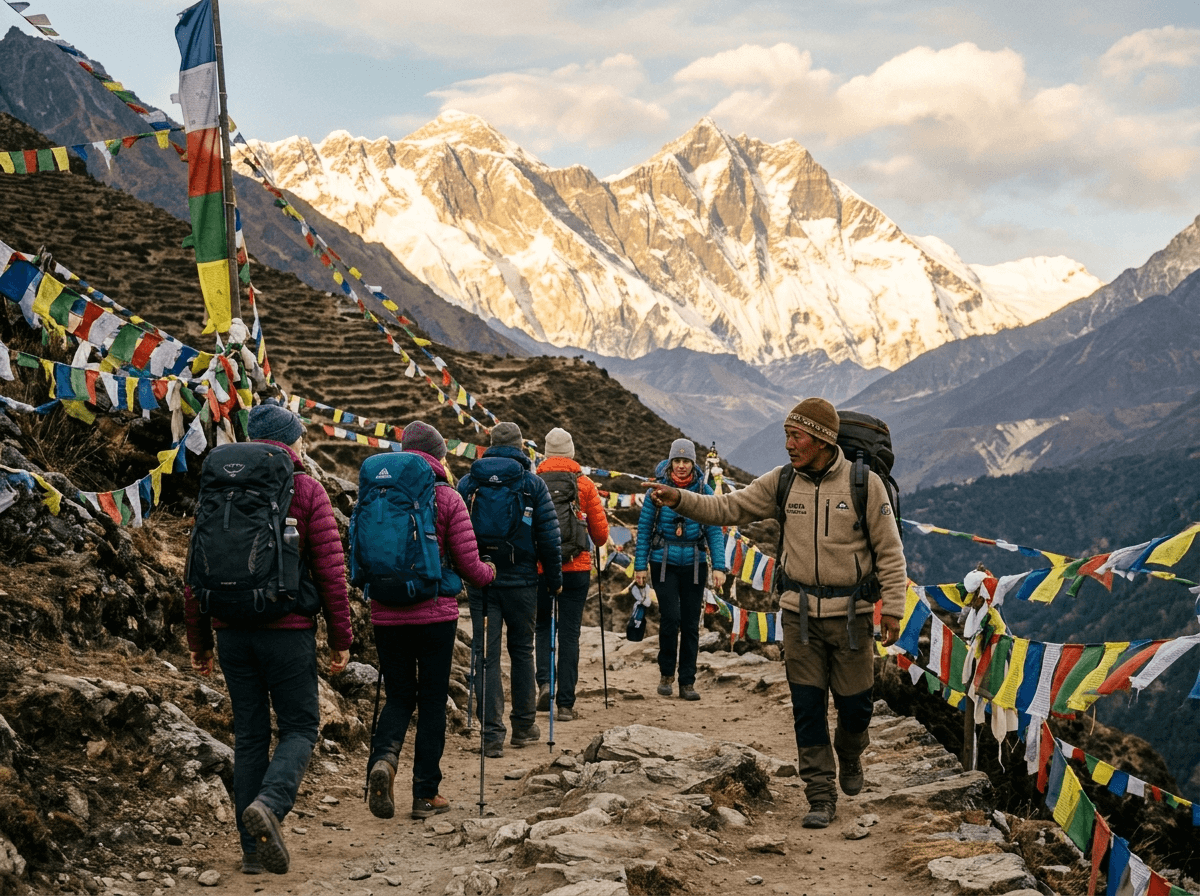
Trekkers on the trail to Everest Base Camp with Himalayan peaks behind
Trek Guides
15 January 2026•9 min read

Everest Base Camp Trek: Complete 2026 Guide (Cost, Itinerary & Best Time)

Keep reading
Trekker with backpack on the Mardi Himal trail
Planning Tips
19 February 2026•7 min read

The Ultimate Nepal Trekking Packing List

Keep reading
The Manaslu massif seen from the circuit trail
Trek Guides
26 February 2026•7 min read

Manaslu Circuit Trek: The Quieter Alternative to Annapurna

Keep reading